
By Olivier Dellacherie, Executive Chairman, Talent4Boards inc.
In a risk-averse world, where everything must be double-checked, secured, and regulated, it becomes more difficult for a board of directors (BOD) to create value.
Nothing to say about the stunning successes of growth companies like Facebook, LinkedIn, Google… as, until their IPOs, they were not listed companies and were able to have an active BOD, entirely dedicated to business development and committed to maximizing value and ensuring sustainability.
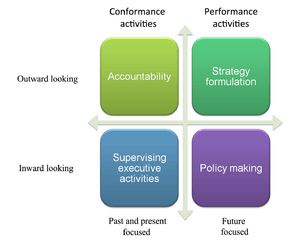
Regulations in matters of corporate governance (CG) have been fundamentally strengthened over the years and across the world, to protect shareholders’ and stakeholders’ interests against risks and conflicts of interests, by disclosing tons of data in many areas such as audit and financial reporting, internal control, risk management, CSR, executive compensation, board appointment, CG compliance, legal liabilities… so board members now spend most of their meetings without adding value to the bottom line. Increasing the number of board meetings and total hours spent on their mandates in recent years is unfortunately not for the benefit of the company, but only the answer to compliance issues.
The cost of assessing risk is now taking precedence over looking for growth and opportunity.
But why would we want to completely avoid risk in an investment which in essence is “at-risk”?
Business angels and VCs know that, being on board to guide the strategy and tune the best return on investment at a certain level of risk. For all the others, called “non-qualified investors”, including a large number of future new equity-based crowd-investors, what are the levels of risk and compliance they want and accept? The regulatory authorities have their own answers to their problems.
The highest standards of CG that I have defended and promoted over the last decade, not only in established companies but also in SMBs, are becoming the “Bible” for followers, and if for sure, it improves internal control and risk management, it should not destroy creativity, challenge, innovation, dynamism, and entrepreneurship… because the largest part of value creation is achieved before the IPO, at least as regards the leverage factor.
So what to do?
A good solution is certainly to set up an advisory board with talented, seasoned senior executives who share the entrepreneur’s main objectives and endorse his strategy, and can provide relevant tailored-made solutions to the BOD, apart from compliance with rules, which remains its fiduciary duty. Don’t confuse this with a body of specialists or experts providing responses or advice on specific technical or operational issues (such as members of scientific or executive committees, or similar) – it is a board of seasoned people with an independent director mind, able to debate, discuss, leverage creativity and develop value, sitting out of formal statutory board structure. In fact, it is a non-executive director brain with all the behavioral skills needed to ensure an effective contribution.
It must not be considered as a Shadow Board, but as a true Advisory Board, working without legal or time constraints, helping BOD members to address strategic or operational issues that they no longer have the time to care about, as all their time and energy are taken up complying with CG principles, often just suggested but in fact required (ie “comply OR explain” becomes “comply AND explain”). As the saying “too many taxes kill tax” goes, too much CG compliance kills CG, which should be dedicated indeed to value creation and long-term sustainability. And don’t forget that the BOD is selected by and responsible for the company shareholders, while the Advisory Board is selected by and works for the CEO and BOD.
Related articles
- Disclaimer - News, data, and statements included in this release are intended exclusively for general information purposes. Talent4Boards does not guarantee that news is accurate or about the correct person and accepts neither liability for the consequences of the reader’s reliance, nor responsibility for the accuracy of the information. Nothing in this release should be considered for decisions about referred securities. Products and brand names may be trademarks or registered trademarks of their respective owners.